
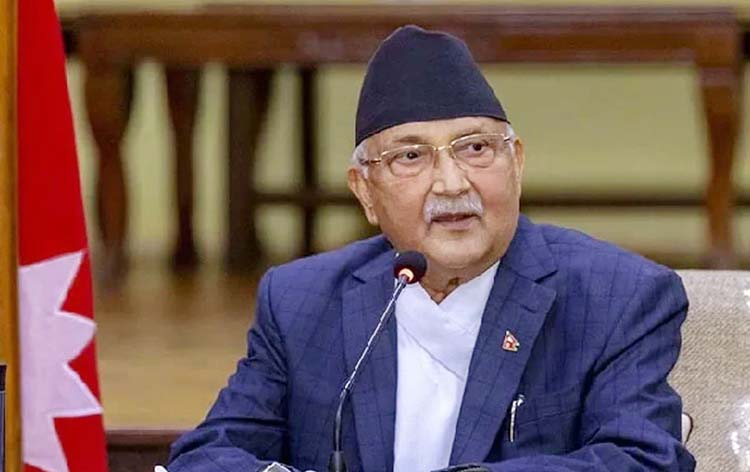
Kathmandu : Nepal Prime Minister K P Sharma Oli is set to make an official visit to India towards mid-September, according to a statement released by the Foreign Ministry on Sunday. The visit is being planned and preparations are currently underway, although the exact date and details of the trip have not been finalized.
Spokesperson Lok Bahadur Chhetri stated that while preparations are ongoing, the final schedule is yet to be confirmed. However, sources at the Prime Minister’s Office have revealed that Oli will embark on his official visit to India on September 16. This visit holds great significance for the two neighbouring countries as it aims to strengthen bilateral ties and foster closer cooperation on various issues of mutual interest.
It is expected that the visit will also focus on addressing any outstanding issues between the two countries and finding ways to enhance economic cooperation and trade relations. Overall, this visit is seen as a positive step towards further strengthening the friendly ties between Nepal and India.
Foreign Ministry spokesperson Lok Bahadur Chhetri revealed on Sunday that preparations for the visit are underway, while stressing that final date and itinerary remain unconfirmed. However, reliable sources within the Prime Minister’s Office indicate the visit will take place starting September 16, lasting approximately two days.
Since assuming office in July 2024, Oli has yet to make his maiden official visit to India — breaking with tradition where new Nepali leaders typically travel to New Delhi first. His first foreign trip was to China in December 2024, reflecting shifting geopolitical dynamics, as India only issued a formal invitation for a bilateral visit following renewed diplomatic engagement this year.
In the interim, Oli held multiple high-level meetings with Indian Prime Minister Narendra Modi — including sideline meetings at the UN General Assembly and the BIMSTEC Summit in Bangkok, where both leaders pledged to advance cooperation across connectivity, hydropower, and trade sectors.
Officials say the September visit will focus on reaffirming Nepal–India ties and resolving pending bilateral issues through renewed dialogue. Anticipated areas include economic cooperation, trade enhancement, infrastructure and energy partnerships, and border management. Both sides aim to revive long‑standing mechanisms for dispute resolution and deepen strategic trust.
Diplomats highlight that the visit signals a diplomatic reset after a period of delayed invitation and perceived chill in relations. India appears to have extended the invitation after Nepal’s decision to host Sagarmatha Sambad and Oli’s overtures to Delhi post‑BIMSTEC meetings, indicating a thaw in bilateral gridlock.
Observers note that Oli’s earlier focus on China and his previous cartographic assertions over contested border areas (Kalapani, Lipulekh, Limpiyadhura) contributed to a diplomatic strain. His upcoming visit may mark an effort to recalibrate Nepal’s foreign policy toward balanced engagement with both neighbours.
Oli’s two-day visit may yield several memoranda of understanding (MoUs), particularly in hydropower-export facilitation, railway and energy infrastructure cooperation, and connectivity projects linking Nepal and India. Nepal’s participation in regional initiatives — such as the International Solar Alliance and India‑Nepal Rail Connectivity Program — will likely receive renewed impetus.
Following past delays—foreign minister Arzu Rana Deuba made multiple attempts to secure invites for most of 2025—a confirmed date carries political weight domestically, reinforcing Oli’s credentials in foreign policy leadership.
Nepal and India are expected to finalize seating plans, delegation levels, and agenda items in the coming weeks. For PM Oli, the visit presents a strategic opportunity to reset bilateral links, diversify Nepal’s foreign relations, and potentially launch new cross-border initiatives.
As India remains Nepal’s largest trading partner and neighbor, the mid‑September visit—if successful—would reaffirm mutual commitments in regional cooperation and mark a significant chapter in diplomatic re-engagement after nearly two years of delay.
