
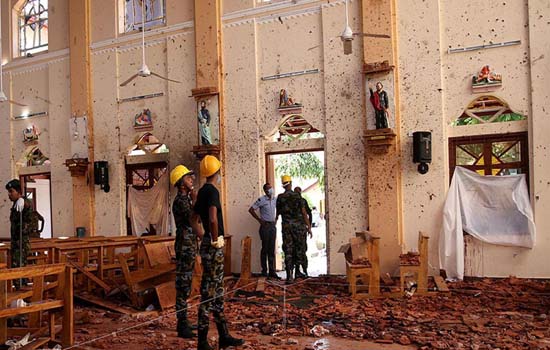
Colombo: Sri Lanka’s National Police Commission has dismissed Nilantha Jayawardena, the former head of the State Intelligence Service (SIS), for negligence related to the 2019 Easter Sunday bombings that resulted in 279 fatalities, including 45 foreigners.
Jayawardena ignored prior warnings of a potential attack by Islamic extremists, having been notified 17 days before the coordinated suicide bombings on April 21, which targeted three hotels and three churches, injuring over 500 people. A disciplinary inquiry found him guilty on seven counts of dereliction of duty, leading to his dismissal as the Commission imposed the maximum penalty.
Initially removed from his SIS role post-bombings, Jayawardena was later appointed deputy head of the police force but was placed on compulsory leave one year ago pending disciplinary action. A top-level investigation found him and four senior officials, including former president Maithripala Sirisena, should face prosecution for their failures. Following a Supreme Court ruling, they have compensated victims over one million dollars. The new government under President Anura Kumara Dissanayake has committed to enhancing investigations into the attacks.
A formal disciplinary inquiry, led by a retired judge, concluded that Jayawardena had failed to act upon timely intelligence warnings of impending terror attacks. The Commission found him guilty on all seven counts of negligence and dereliction of duty, imposing the maximum disciplinary penalty, including removal from all police service positions. He had been placed on compulsory leave in July 2024, pending investigation, and was dismissed as of July 2025.
The Supreme Court previously ruled on 12 January 2023 that Jayawardena and several senior officials were accountable for violating victims’ fundamental rights, ordering compensation payouts—Rs 75 million for Jayawardena, later fully paid in 2024 after a delayed settlement and apology to the Court.
Authorities and subsequently the Supreme Court criticized him for not disseminating the warnings widely or raising them via the National Security Council, which might have triggered preventative measures. The Court characterized such omissions as “unforgivable” and unbecoming of a senior intelligence officer.
The Easter bombings, Sri Lanka’s deadliest terrorist incident, targeted three churches and three luxury hotels on 21 April 2019, killing over 270 civilians and injuring more than 500. The attackers were linked to local extremist factions pledging allegiance to Islamic State.
Following the attacks, a Presidential Commission of Inquiry recommended criminal proceedings against senior political and security figures, including Jayawardena, then‑President Maithripala Sirisena, then-IGP Pujith Jayasundara, and Defence Secretary Hemasiri Fernando. However, formal criminal charges have yet to be initiated internally.
The Catholic Church and civil society leaders, including Cardinal Malcolm Ranjith, have demanded further criminal accountability and called for independent investigations into systemic failures. Ranjith specifically remarked that Jayawardena “should be prosecuted,” exposing how institutional failures allowed the tragedies to unfold.
The dismissal underscores Sri Lanka’s intent to enforce accountability at the highest levels within its security apparatus. It may add pressure for broader reforms in intelligence sharing and public safety protocols. Still, analysts argue that full restoration of public trust hinges on transparent legal prosecution—not solely disciplinary action.
Sri Lanka’s government under President Anura Kumara Dissanayake has pledged deeper investigations into the Easter bombings and renewed focus on preventive intelligence cooperation. The dismissal of Jayawardena may set a precedent,but many view it as only the beginning of institutional overhaul and justice for victims.
